
Calling Someone a Criminal Doesn’t Make It So
President Donald Trump sometimes labels as criminals people who challenge him. These include James Comey, Jerome Powell, Jack Smith, Joe Biden, Nancy Pelosi, Adam Schiff, Letitia James, Mark Kelly and five other Democratic lawmakers who produced a video Trump called treasonous. Criminal charges have been brought against some of these critics. Fortunately for his targets, it takes evidence presented in a court of law producing either a guilty plea or a jury verdict to make the criminal label stick. None of these people have been convicted of the crimes Trump has accused them of.
Under the rule of law, every person accused or charged with a crime is presumed innocent until proven guilty beyond a reasonable doubt. This determination must be found unanimously by a jury of their peers. That requires real evidence – not social media screeds – in a court of law under the rules of evidence.
Similarly, hundreds of thousands of immigrants rounded up for deportation are routinely called the worst of the worst — murderers and rapists and child molesters — although records show most committed no serious crime. Only 5 percent of people arrested by ICE have been convicted of a violent crime, according to the Cato Institute, which cited a secret Department of Homeland Security report.
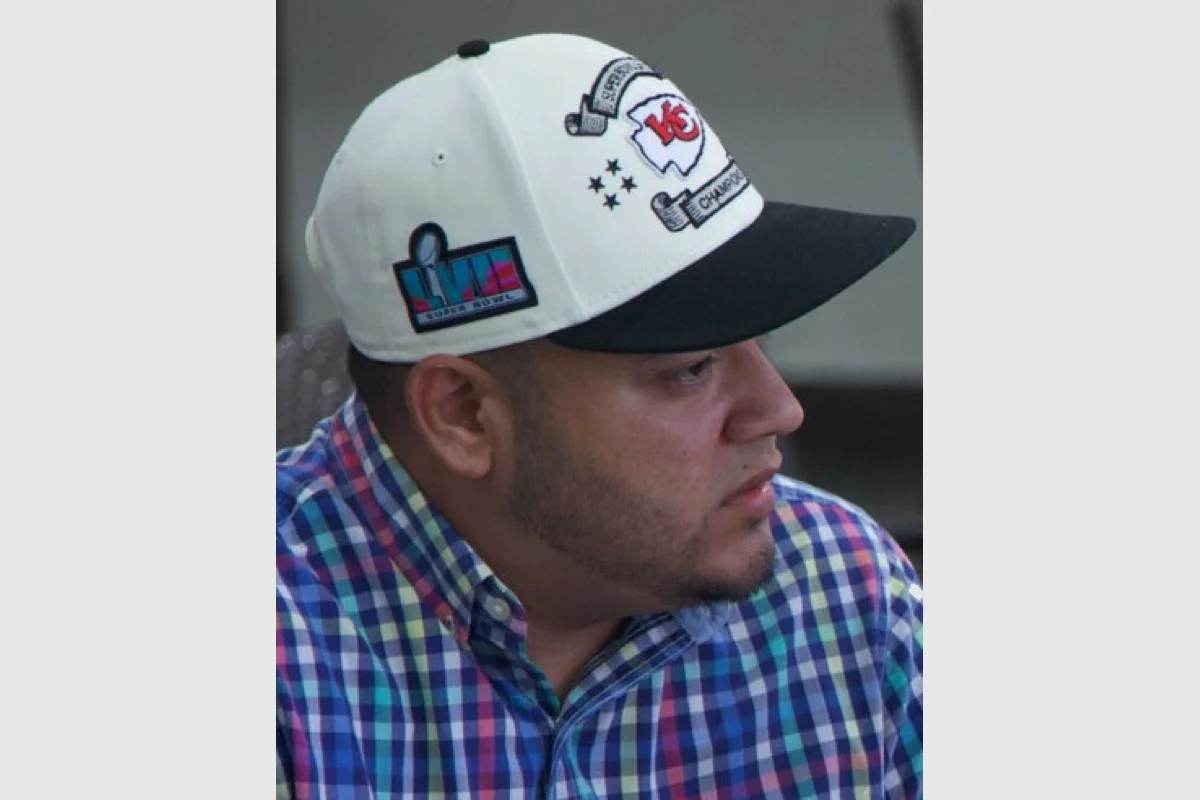
And then there is the case of Kilmar Abrego Garcia. He is a Salvadoran living in Maryland whom the Trump administration has targeted for a year while courts keep telling the government to stop. Judges have found that government officials have ignored court orders, acted without authority, “affirmatively misled” a judge, and violated legal standards in their campaign to detain, prosecute, and deport him.
When “‘the prosecutor picks some person whom he dislikes or desires to embarrass . . . and then looks for an offense, that [is] the greatest danger of abuse of prosecuting power,”’ U.S. District Judge Waverly D. Crenshaw Jr. in Nashville wrote last month. He was quoting a 1940 article by then U.S. Attorney Robert H. Jackson. “That is the situation here”, said Judge Crenshaw Government officials from the President on down have called Abrego Garcia an “animal,” a “terrorist,” a trafficker of human beings, and a man too dangerous to walk free in America. Despite all those accusations, he was indicted only for smuggling undocumented workers, Nothing has been proved. And now, if Judge Crenshaw’s ruling in Nashville survives appeal, that day may never come.
Judge Crenshaw concluded the indictment was an act of government revenge against Abrego Garcia, who had previously sued over his wrongful deportation to a notorious prison in San Salvador. He won court orders — including one from the U.S. Supreme Court — demanding he be returned to this country. When he exercised his constitutional right to sue the government — and won – that was when Tennessee federal prosecutors sought his indictment. Judge Crenshaw said evidence showed a “presumption of vindictiveness” in prosecuting Abrego, a presumption the government “has failed to rebut.”
The government’s conduct in earlier efforts to detain Abrego Garcia looks vindictive, too. U.S. District Judge Paula Xinis in Maryland wrote in December that the administration’s actions in that case “can only be construed as punitive…”
In trying to vindictively punish Abrego Garcia, administration officials and the prosecutors on his case have become the wrongdoers in the eyes of the federal judges hearing the cases. And because the government behaved so badly, Judge Crenshaw tossed out the human trafficking indictment, leaving the administration with no vehicle for prosecution.
Abrego Garcia remains an undocumented immigrant, having arrived in the U.S. as a teenager fleeing gang violence in El Salvador, his lawyers have said. An immigration judge ruled in 2019 that he can’t be deported to El Salvador because he had shown he would probably face persecution if returned.
So, the administration, having been ordered by the U.S. Supreme Court last year to bring him back from El Salvador, went searching for a third country to send him to. Officials listed a series of African countries as candidates, four in all, starting with Uganda. But none of those were viable options, the evidence showed, and at least two hadn’t even been asked.
There was one country willing to grant Abrego Garcia refuge, one which he agreed to accept: Costa Rica. At one point the administration offered to send him there, but only if he pleaded guilty to human trafficking. Otherwise, he’d be sent to Africa. He refused.
There was a moment this month when it looked like the administration might ease up. Questioned in a Senate Committee on June 2, newly installed Homeland Security Secretary Markwayne Mullin said, “we’ll be happy to send him” to Costa Rica, if he’s willing.”
Abrego Garcia’s lawyers jumped on that and filed a notice in Judge Xinis’ court that same day, quoting Mullins’s statement.
But Mullins’s remarks turned out to be an off-the-cuff answer to a question, not an official change in policy. The day after Mullins’s testimony, Justice Department lawyers filed an extensive brief apparently prepared before Mullins’s appearance stating its intention to send Abrego Garcia to Liberia. “[S]enior levels” of government had spent “significant . . . resources and political capital” in negotiations with Liberia, which agreed to take Abrego Garcia and not torture him.
The brief asserts that “abandoning such negotiations could cast doubt on the diplomatic reliability of the United States in future agreements with Liberia and other countries.”
Both sides asked for more time to brief the issues, which Judge Xinis granted.
Perhaps the most concerning thing about the practice of calling administration critics criminals, and even prosecuting them, is the chilling effect it has on dissent. If powerful people like a state attorney general or a U.S. Senator can be targeted with trumped up charges, it sends a message to all who want to speak out that there can be dire consequences for doing so. This atmosphere of threats and intimidation undermines freedom of speech and the rule of law and should be opposed by all people of good conscience.
Additional Statements
The Justice Department’s Attacks on the Rule of Law in Minnesota
The rule of law depends on courts that have the authority to say “stop” and a government that stops when ordered to.
Together, We Are Building a More Informed Georgia!
What a wonderful evening at The Carter Center! Thank you to the many GLRL members, friends, and supporters who joined us for Building a More Informed Georgia, an evening of meaningful conversations, new connections, and a shared commitment to defending the Rule of...
Do the rules apply to everyone?
Watch Video The rule of law rests on a simple principle: the same rules should apply no matter how powerful you are. A 2026 settlement gave President Trump, his children, and the Trump Organization retroactive protection from IRS audits. Future filings can still be...
So, what actually happens after Georgians vote?
View Carousel No one wants to hear “just trust us” when it comes to counting your vote. Written procedures, trained local officials, audits, and lawful ways to investigate concerns all help protect the count. We don’t have to choose between taking election security...
Join Us
We are building a coalition of Georgia attorneys who are committed to the Rule of Law. Please fill out the form if you would like to be part of our initiative to preserve the Rule of Law.
Contact Us
Do you have questions or need to speak with GLRL? Email info@georgialawyersfortheruleoflaw.org, and we'll get back to you as soon as we are able.